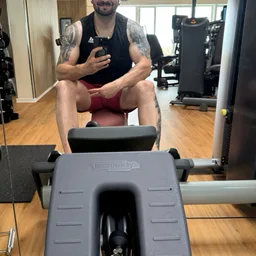
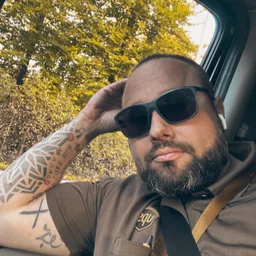
206 posts403 upvotes
I LOST OVER 30 KG ON RETA – BUT HOW MUCH OF THAT WAS ACTUALLY MUSCLE?
Translated by AI
The scale says success. But after losing over 30 kilos, I'm asking myself a different question by now: What exactly did I actually lose?
115 kg.
Today about 84 kg.
Over 30 kilos less in around eight months.
If I only look at the scale, that's a brutal success for me.
Retatrutide cut my hunger and especially that constant food noise more than I would ever have thought possible.
On top of that, lots of exercise, nutrition under control, and a calorie deficit for months.
But the closer I get to my goal weight, the more I'm thinking about a question I honestly hardly thought about at the start:
HOW MUCH OF THOSE 30 KILOS WAS ACTUALLY FAT – AND HOW MUCH MUSCLE?
⸻
AT THE START, ONLY ONE NUMBER MATTERED TO ME
Weight down.
That's it.
If there were a few hundred grams less on the scale again in the morning, I was happy.
And especially at the beginning, it sometimes went really fast.
Today I obviously know:
Weight loss is not automatically fat loss.
Especially at the beginning of a strong deficit, water and stored glycogen can fluctuate quite a bit.
After that, hopefully it's mostly fat.
But with bigger weight loss, you can also lose fat-free mass.
And that's exactly where it gets interesting for me.
⸻
RETA DOESN'T JUST EAT YOUR MUSCLES
You read this a lot these days:
"GLP-1s make you skinny fat."
In my opinion it's not that simple.
When someone loses a massive amount of weight, they normally don't lose only body fat – regardless of whether the weight loss happens with or without medication.
For Retatrutide, data from a phase 2 body composition substudy also shows that fat-free mass decreased alongside fat mass. According to the researchers, the ratio was basically within a range you can also see with other obesity treatments.
To me that means:
It's not that Reta automatically "eats" muscle.
The more decisive question is how you handle your muscle during a big weight loss.
⸻
AND THAT'S EXACTLY WHERE I'D LOOK MUCH CLOSER TODAY
During my weight loss I did a lot of exercise and made sure to get enough protein.
That was definitely right.
But if I were standing at 115 kg again today, I'd pay even more attention to one point from the start:
Not just tracking weight – but performance and body composition.
How are my strength numbers developing?
What does my body look like at the same weight?
How are my measurements changing?
How much protein am I actually getting in?
And above all:
Is my training getting worse while the scale drops faster and faster?
Because that's exactly the trap with extremely strong appetite suppression.
⸻
IF YOU'RE NOT HUNGRY, YOU CAN ALSO EAT TOO LITTLE
That sounds completely stupid at first.
After all, less hunger is exactly one of the reasons Reta worked so brutally well for me.
But at some point,
"Awesome, I'm not hungry."
can also turn into:
"Shit, I barely got any protein today and generally ate way too little."
And that's not necessarily an advantage, especially for training.
If I want to keep as much muscle as possible, I still need strength training, protein and enough nutrients.
The scale doesn't care.
It's happy about lost muscle too.
⸻
SO THE SCALE ONLY TOLD ME HALF THE STORY
Looking back, I find that pretty interesting.
When it says minus 30 kg there in the morning, it feels incredibly clear-cut.
But the scale doesn't tell me:
How much fat is gone?
How much water?
How much fat-free mass?
How much actual skeletal muscle?
And even terms like "lean mass" or fat-free mass are often directly equated with muscle mass.
That's not correct either.
Fat-free mass includes much more than just muscle – among other things body water, organs and bones.
That's why, even with DEXA or other body composition measurements, I wouldn't act like we can say down to the gram how much muscle someone has lost.
⸻
SO WAS MY WEIGHT LOSS TOO FAST?
I can't answer that perfectly in hindsight.
I lost over 30 kg and I'm extremely happy with the result.
At the same time, I'm noticing now that my goal is changing.
At the start I just wanted to:
GET LIGHTER.
Today I want to:
LOOK BETTER.
And those are two completely different goals.
Whether I end up at 80, 82 or 85 kg matters less and less to me.
If I have more muscle and less body fat for it, the number on the scale interests me way less.
⸻
AND THAT'S EXACTLY WHY THE NEXT PHASE IS MORE EXCITING FOR ME THAN THE LAST KILOS
I'm slowly getting to the point where I no longer mainly want to lose weight.
I want to build muscle.
And that's changing my whole way of thinking right now.
Not:
"How do I get the scale down as fast as possible?"
But:
"How do I build my body up in the smartest way?"
Training is getting more important.
Protein is getting more important.
Recovery is getting more important.
And the scale is slowly losing its status as the most important number.
⸻
WOULD I DO ANYTHING DIFFERENTLY?
Yes.
I'd document the whole process better from the start.
Photos under the same conditions.
Measurements.
Strength numbers.
Body weight.
Maybe an occasional proper body composition measurement – knowing that this isn't perfect either.
Because now I have a pretty impressive result on the scale.
But I'd damn well like to have better data on HOW this result actually came about.
That's probably one of my biggest learnings from the whole Reta journey.
⸻
AND NOW I'M INTERESTED IN YOUR EXPERIENCE
Especially for those of you who lost massive weight with Reta, Tirzepatide or Semaglutide:
Did you keep your strength numbers during it?
Did you measure body composition?
Did you ever get the feeling you'd visibly lost muscle?
And the most interesting question:
Would you rather lose weight a bit slower the second time if it meant you might keep more muscle?
I'm curious how different the experiences here are.
This is my personal experience report and not a medical recommendation. Weight loss and changes in body composition vary from person to person; body composition measurements also have methodological limits.